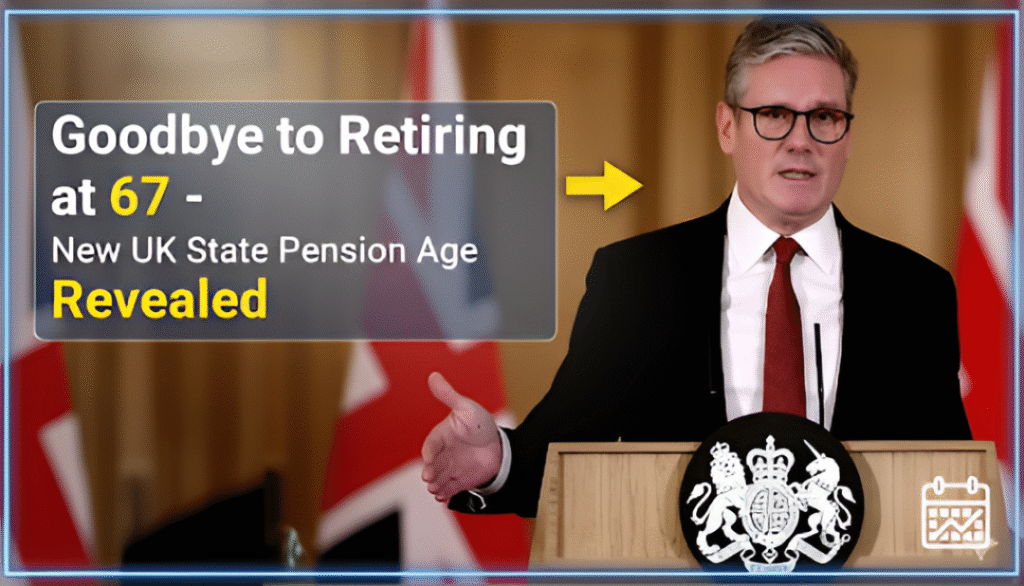
The UK Government has confirmed a major policy shift by announcing a new change to the State Pension Age, signalling the end of the long-standing plan for retirement at 67. This update is one of the most significant adjustments to the pension system in recent years, and it is expected to impact millions of current workers, future retirees and households planning their financial future. Rising life expectancy, pressure on the pension budget and changing workforce needs have all contributed to this decision, making the announcement a nationwide talking point.
What Has the Government Announced?
The announcement states that the previously planned increase in the State Pension Age to 67 will no longer apply in the same way. Instead, the government has proposed a new retirement age structure that will be introduced gradually over the coming years. This change adjusts the timeline for pension eligibility and redefines when future generations will be able to claim the State Pension. Officials have said the new plan aims to balance public finances while ensuring fairness for younger and older workers.
Why Is the State Pension Age Changing?
The government has made this adjustment due to a combination of demographic, economic and social factors. The UK’s average life expectancy has risen over the past decades, putting additional pressure on public pension funds. At the same time, inflation, healthcare costs and employment trends have created new financial challenges. By revising the pension age, the government aims to create a sustainable system that can continue delivering long-term support to future retirees. It also reflects changes in the way people work, live and plan their retirement.
What Is the New State Pension Age?
While the final age structure will be introduced in stages, the new plan indicates that the pension age will change differently than previously expected. Instead of a fixed jump to 67, the government plans a more flexible, age-band model that will apply to future generations based on birth year. Workers under a certain age bracket will see a gradual increase, while people closer to retirement will not face immediate changes. Further details, including the exact year-by-year structure, will be released once legislative approval is completed.
Who Will Be Affected by the Change?
The new rule will primarily affect working-age adults, especially those in younger age groups who were expecting to retire at 67. Those nearing retirement may see minimal or no change, while younger workers may face a different pension age target. Individuals born after a specific cutoff year are expected to be part of the revised framework. The government aims to avoid sudden disruptions by ensuring a clear transition period so that workers have enough time to adjust their financial planning.
Impact on Current and Future Retirees
For current pensioners, nothing will change; they will continue receiving their pension as usual. For future retirees, the updated age structure may require new retirement strategies, including savings, investments and workplace pensions. Financial experts advise workers to review their long-term plans to ensure they are prepared for the new pension timeline. The government has stated that the change will ultimately support stability in the pension system, benefitting both current and future generations.
How Will This Affect the UK Economy?
Economists believe the new pension age structure could help reduce pressure on the national budget by ensuring pension payments match demographic realities. A workforce that stays employed longer could strengthen productivity, increase tax revenue and support long-term economic stability. However, some labour groups have highlighted the challenges faced by workers in physically demanding jobs, urging the government to consider additional support for them. The government has assured that fairness and flexibility will remain key priorities during implementation.
Reaction From the Public and Policy Experts
The announcement has received mixed reactions from citizens and experts. Many have welcomed the update, saying it reflects the financial realities of today’s world, where people live longer and remain active well into their later years. Others worry that an increased pension age may create difficulties for individuals in strenuous jobs or those facing health challenges. Policy analysts expect the government to introduce additional support measures to address such concerns and ensure the transition is smooth for all.
What Should Workers Do Now?
Workers are encouraged to stay informed about official updates, as more details about the new pension age structure will be published soon. Reviewing personal retirement savings, workplace pension contributions and long-term financial plans can help individuals prepare for possible changes. Financial advisers suggest adjusting retirement strategies early so that workers have time to build a stable financial cushion before reaching the new pension age. Staying updated through GOV.UK announcements will ensure individuals don’t miss important developments.
How Will the New State Pension Age Affect Workplace Planning?
The updated State Pension Age will influence how employees and employers plan future work structures. Companies may need to adjust retirement policies, extend flexible working options and provide long-term career support to older workers. Employees, especially those in mid-career stages, may reconsider their savings, pension contributions and retirement timelines. Experts suggest that the shift will encourage a greater focus on financial literacy so individuals can manage their pension funds more confidently as they approach the revised pension age.
Will the Government Introduce Extra Support for Hard-Working Citizens?
Many public groups and policy experts expect the government to roll out additional support measures for workers who perform physically demanding jobs or face long-term health issues. Since not all occupations can be extended comfortably into later years, the government may consider special exemptions or early-access pension schemes for vulnerable groups. Discussions are ongoing about offering targeted benefits so that the new pension age does not create unfair pressure on those who rely heavily on manual labour for their livelihoods.
Conclusion
The decision to change the retirement age marks a major shift in the UK’s pension policy, signalling the end of the expectation of retiring at 67. The government’s revised structure aims to create a fair, sustainable and future-ready pension system that reflects changing demographics and economic conditions. While the new rules will impact many working-age adults, a gradual rollout is expected to minimise disruption. As more details are announced, workers across the UK will be able to plan their retirement in alignment with the country’s updated pension framework.